Why Crane Operator Certification Matters for Job Site Safety
Understanding NCCER and CCO Certification Standards
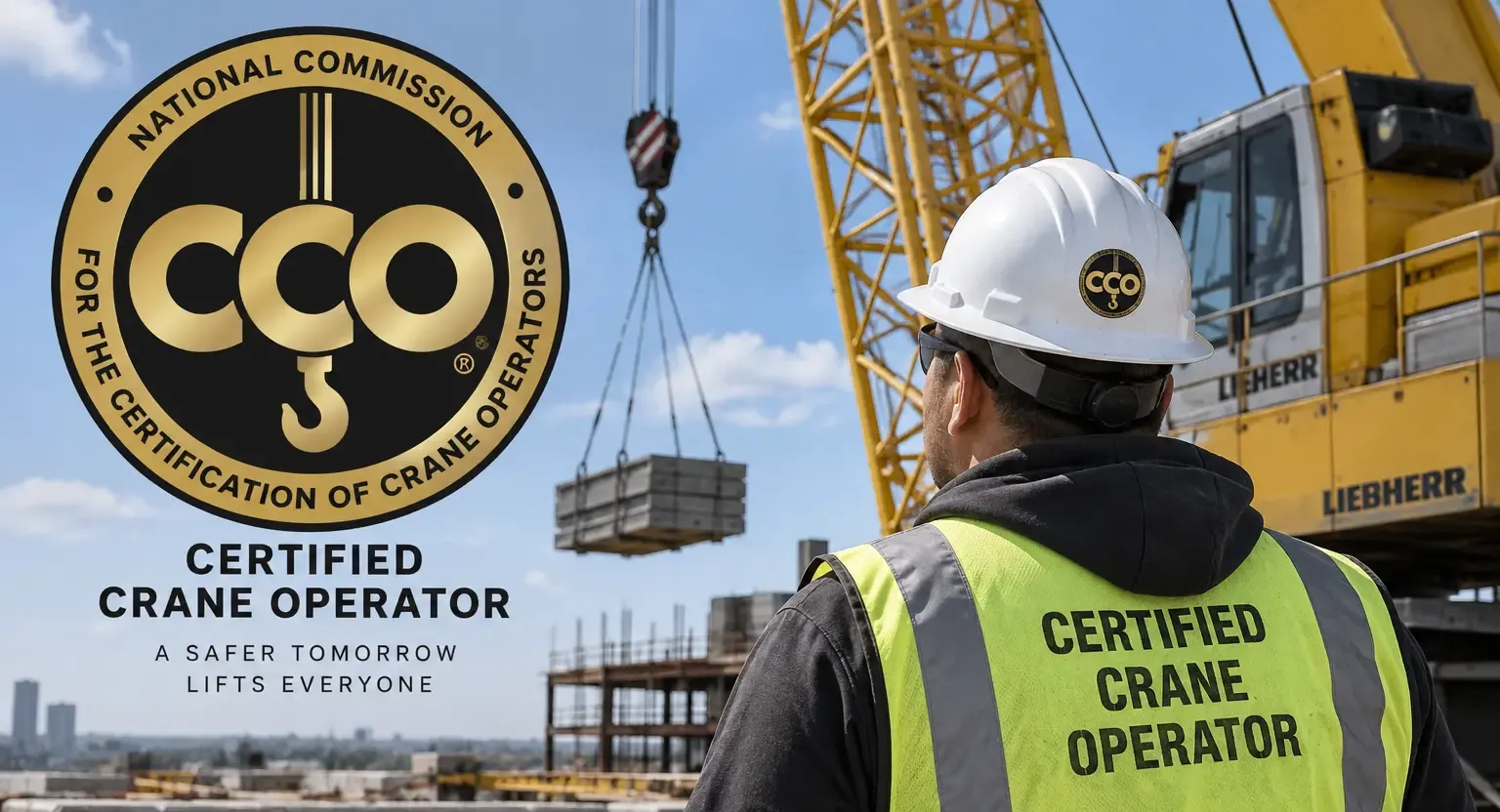
A crane is only as safe as the person operating it. On a steel erection site, that operator must handle multi-ton loads with precision, often working within feet of crews on the ground and in the structure above. Certification confirms that the person behind the controls has the training and tested competency to do the job safely, every time.
Understanding NCCER and CCO Certification Standards
Two of the most recognized credentialing bodies in the crane industry are NCCER (National Center for Construction Education and Research) and CCO (Certified Crane Operator, administered by the National Commission for the Certification of Crane Operators).
NCCER certification provides standardized training and credentialing across multiple construction trades, including crane operations, rigging, and signaling. It establishes a consistent baseline of knowledge and skill across the industry.
CCO certification focuses specifically on crane operators and includes both written and practical exams. Operators are tested on load chart interpretation, rigging fundamentals, safe operating procedures, and crane-specific technical knowledge, depending on the type and capacity of crane they're certified to operate.
Both credentials are widely recognized across the construction industry and are often required — either by OSHA regulation or by project specification — before an operator can run a crane on a job site.
What Certification Actually Verifies
Certification isn't just a formality. It confirms that an operator can:
- Accurately read and apply load charts for a specific crane and configuration
- Understand boom angle, radius, and how they affect safe lifting capacity
- Recognize rigging setups and communicate effectively with riggers and signal persons
- Identify and respond appropriately to changing site or weather conditions
- Operate within the manufacturer's specifications and OSHA regulations
These skills can't be assumed from experience alone. Certification testing exists specifically to confirm operators can apply this knowledge consistently and safely, not just recall it in a classroom setting.
The Safety Impact of Certified Operators
Most crane-related incidents on construction sites trace back to human error — misjudged load capacity, miscommunication during a lift, or operating outside safe parameters. Certified operators are trained specifically to avoid these failure points, reducing risk not just for themselves, but for every worker on the ground and in the structure being erected.
Beyond safety, certified operators also tend to work more efficiently. A thorough understanding of load charts and site conditions allows for smoother, more confident lifts—keeping projects moving without unnecessary stops or mid-lift second-guessing.
What to Look for When Hiring a Crane or Erection Team
When evaluating a crane rental company or steel erection contractor, operator certification should be a baseline requirement, not a bonus. Ask directly whether operators hold current NCCER or CCO credentials, and confirm they keep certifications up to date as regulations and equipment change.
A team that treats certification as a standard — not an exception — is signaling something important about how seriously they take safety across every part of a project.
Frequently Asked Questions
What is CCO certification? CCO (Certified Crane Operator) is a nationally recognized credential from the National Commission for the Certification of Crane Operators, verifying an operator has met defined safety and competency standards.
Is crane operator certification required by law? OSHA requires crane operators on most construction sites to be certified or qualified through an accredited program, with specific requirements varying by crane type and jurisdiction.
What's the difference between NCCER and CCO certification? NCCER provides training and credentialing across multiple construction trades, including crane operations, while CCO is specifically focused on crane operator certification and testing.
How does operator certification affect job site safety? Certified operators are tested on load charts, rigging knowledge, and safe operating procedures, reducing the risk of accidents caused by operator error.